Creatine for Women Over 40: Is It About More Than Building Muscle?
Nov 16, 2026
by Kim Bouldin
Creatine for Women Over 40: Is It About More Than Building Muscle?
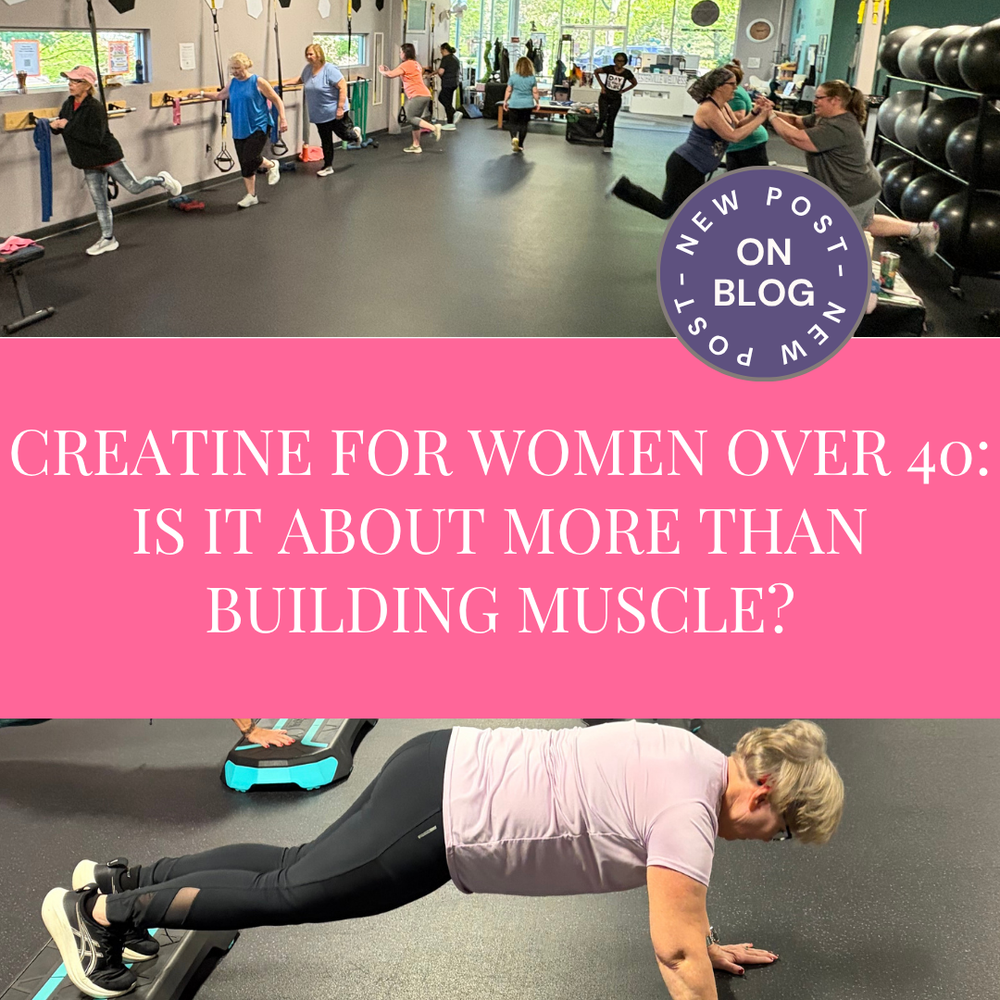
If you think creatine is only for bodybuilders, it’s time to take another look.
Creatine has become one of the most talked-about supplements in women’s health, especially for women in perimenopause and menopause. We hear questions about it in the studio almost every week, and the curiosity makes sense.
Creatine is well known for supporting strength and exercise performance. But researchers are also exploring its possible role in brain health, mental energy, and healthy aging.
So what does the research actually say, and what should women over 40 know before trying it? Let’s walk through it.
First, What Is Creatine?
Creatine is a compound found naturally in your muscles. Your body makes some on its own, and you also get it from foods like red meat and seafood.
Its main job is helping your body produce energy for short bursts of effort: lifting weights, climbing stairs, sprinting, or pushing through a tough set. Creatine helps refill one of the energy sources your muscles rely on in those moments.
And as we age, keeping that muscle strong becomes more important than ever.
Creatine and Muscle: Why It Matters After 40
The hormonal shifts of perimenopause and menopause affect muscle and body composition. Many women notice they’re losing strength, workouts feel harder, or their body is changing in ways it never did before.
Research shows that creatine, especially when paired with strength training, can improve strength and support gains in lean muscle.
And muscle is about so much more than looking toned. It supports:
- Everyday strength and mobility
- Balance and physical function
- Independence as you age
- Bone health, through the strength training that builds it
- Your ability to stay active and enjoy your life
Carrying groceries, lifting a suitcase into the overhead bin, keeping up on a hike, getting up off the floor with ease: all of it gets easier when your body is strong.
What About Brain Fog?
This is where things get interesting.
So many women in menopause tell us about brain fog. You walk into a room and forget why. You lose your train of thought mid-sentence. Words that used to come easily suddenly don’t.
Sound familiar?
Your brain needs energy to work, just like your muscles do. Because creatine helps cells maintain their energy supply, researchers are studying whether it could support certain aspects of brain function. Some studies suggest possible cognitive benefits, particularly during sleep deprivation or mental stress.
That said, the research is still developing. There isn’t enough evidence yet to say creatine reliably prevents menopause brain fog or improves memory for every woman. It’s a promising area, and it’s worth keeping promising and proven separate.
Can Creatine Help With Fatigue?
Let’s be honest: sometimes the hardest part of menopause isn’t the scale. It’s feeling like you have nothing left in the tank.
Disrupted sleep, shifting hormones, full schedules, and everything else on your plate can make energy a real struggle.
Creatine may support physical performance by helping your muscles produce energy during intense effort, and researchers are also looking at its effects on mental fatigue.
But creatine can’t replace quality sleep, good nutrition, or a conversation with your doctor about ongoing fatigue. Think of it as a possible addition to healthy habits, not a magic energy boost.
What the Research Uses, and Questions to Ask
If you’re curious about creatine, here’s what’s helpful to know before you talk with your healthcare provider.
Creatine monohydrate is the most studied form, and you don’t need a pricey blend with a dozen extra ingredients. Studies commonly use 3 to 5 grams a day, and consistent daily use appears to build up muscle creatine stores over time without a “loading” phase.
A few other things to keep in mind:
- Creatine can cause some water weight at first, so a small change on the scale is normal.
- Results build gradually, not overnight.
- Staying well hydrated matters.
- Supplements aren’t tightly regulated, so look for products that are third-party tested.
Some good questions to bring to your provider: Is creatine appropriate for me? Does it interact with any of my medications? Are there health considerations, such as kidney health, that I should factor in? This conversation is especially important if you have kidney disease or take medications that affect kidney function.
The One Thing Creatine Can’t Replace
Here’s what we most want you to take away.
Creatine may be a helpful supplement, but it can’t do the work for you. If you’re taking it and never challenging your muscles, you’re missing one of its biggest opportunities.
Strength training should be a priority for every woman over 40. Pair it with enough protein, balanced nutrition, regular movement, and quality sleep, and you’re giving your body a strong foundation for the years ahead.
If you’d like support with the nutrition side, our partner Violeta Morris, The Concierge Dietitian, works with women to build nutrition plans that fit their bodies, their goals, and their real lives. She can also help you look at where supplements like creatine fit into the bigger picture.
You don’t need hours in the gym or an extreme program. You need consistency and a plan that fits your body.
Invest in the Stronger You
Menopause doesn’t mean your strongest years are behind you. For many women, it’s the moment they start prioritizing their health in a whole new way.
Whether you’re curious about creatine, ready to start strength training, working on your nutrition, or simply want more energy for everyday life, the most important step is getting started.
At FabYOUlous Fitness, we help women navigate perimenopause and menopause through strength training, personalized coaching, and sustainable nutrition habits, all in a supportive community of women who get it.
Because the goal isn’t just to look better. It’s to feel stronger, have more energy, build confidence, and feel like yourself again.
Ready to Find What Works for You?
Stop guessing about which supplements, workouts, or nutrition strategies to follow. Let’s build a plan around your body, your life, and your goals.
Book your complimentary Strategy Session with FabYOUlous Fitness.
Your next chapter can be your strongest one yet.
