Menopause Weight Gain: Hormonal Weight Gain vs Calorie Surplus Explained
May 11, 2026
by Kim Bouldin
Menopause Weight Gain: Hormonal Weight Gain vs Calorie Surplus Explained
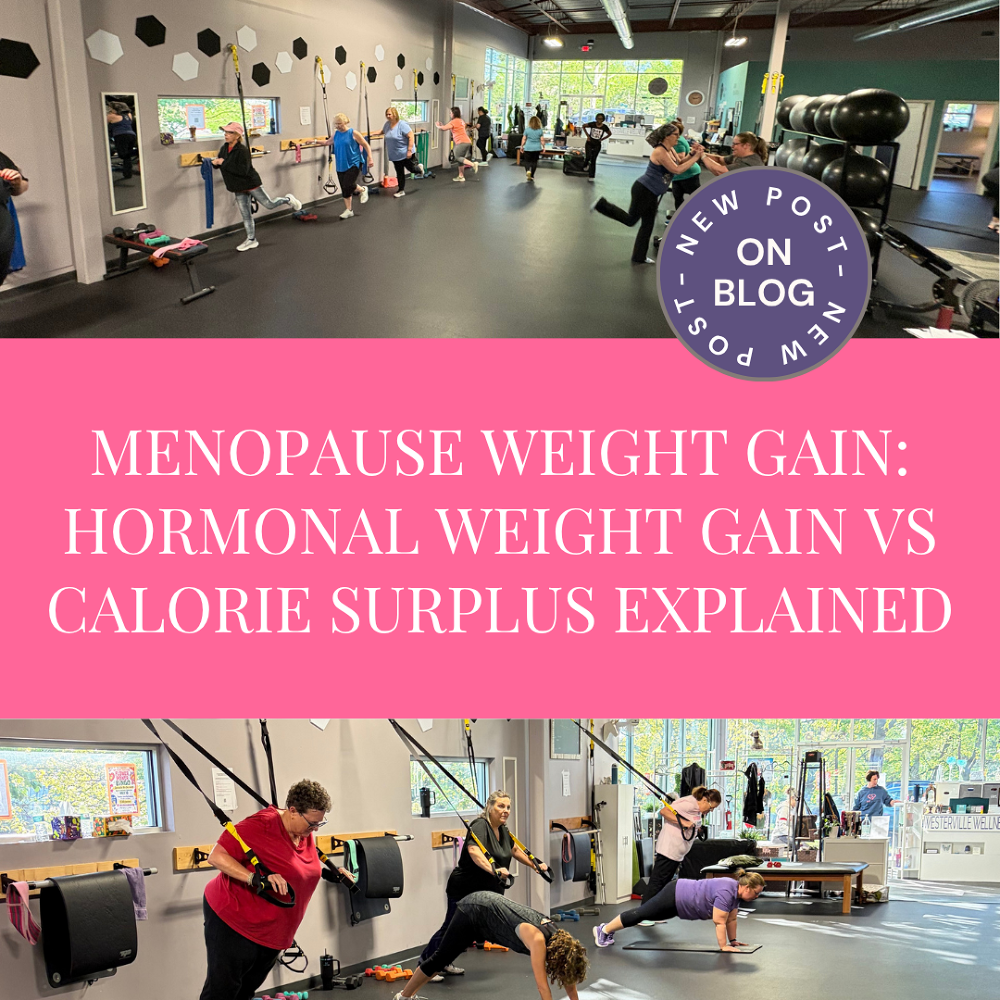
If you’re struggling with menopause weight gain and wondering why your body is changing despite doing “all the right things,” you’re not alone.
Many women in their 40s and 50s notice stubborn weight gain that doesn’t respond to traditional dieting. The workouts that used to work stop working. The scale slowly creeps up. And the frustration builds.
So what’s really going on?
Is it hormonal weight gain… or is it simply a calorie surplus?
Let’s break it down in a way that actually makes sense.
Why Menopause Weight Gain Feels So Confusing
For years, weight loss advice has been simple:
Eat less. Move more.
And while a calorie surplus can lead to weight gain, this approach doesn’t fully explain menopause weight gain.
Because after 40, your body is no longer operating under the same rules.
Hormones begin to shift, and those changes affect:
- How your body stores fat
- How efficiently you burn calories
- Your hunger and cravings
- Your energy levels
So while calories still matter, they are no longer the only factor driving weight gain.
What Is Hormonal Weight Gain During Menopause?
Hormonal weight gain during menopause isn’t about suddenly eating drastically more food.
It’s about your body responding differently to the same lifestyle due to changes in key hormones like:
- Estrogen
- Progesterone
- Cortisol
- Insulin
These shifts are what make menopause weight gain feel so frustrating and unpredictable.
1. Estrogen Decline and Menopause Belly Fat
One of the biggest drivers of menopause weight gain is the drop in estrogen.
As estrogen declines, your body becomes more likely to store fat around the abdomen. This is why so many women notice an increase in belly fat, even if their weight hasn’t changed significantly.
It’s not just weight gain. It’s a shift in body composition.
Less muscle. More fat storage.
2. Muscle Loss Slows Your Metabolism
Another major contributor to menopause weight gain is muscle loss.
As women age, they naturally lose muscle mass. This process accelerates during menopause.
Less muscle means:
- A slower metabolism
- Fewer calories burned at rest
- Easier fat gain
So even if you’re eating the same amount, your body is burning fewer calories, which can create a subtle calorie surplus over time.
3. Stress and Cortisol Increase Fat Storage
Modern life doesn’t slow down just because your hormones are changing.
Between work, family, and daily responsibilities, stress levels stay high. This leads to increased cortisol, which plays a big role in menopause weight gain.
Elevated cortisol can:
- Promote belly fat storage
- Increase cravings for sugar and carbs
- Disrupt sleep
This creates a cycle that makes fat loss feel nearly impossible.
4. Insulin Resistance and Blood Sugar Changes
Hormonal shifts during menopause can also impact how your body processes carbohydrates.
As insulin sensitivity decreases:
- Your body stores more fat
- Energy levels become unstable
- Cravings increase
This is another hidden factor behind menopause weight gain, even when your diet hasn’t drastically changed.
Hormonal Weight Gain vs Calorie Surplus: Which One Matters More?
Here’s the truth:
A calorie surplus still matters.
But during menopause, your hormones are influencing that equation more than ever.
Menopause weight gain is not just about eating more. It’s about your body changing how it uses and stores energy.
So if you feel like your body isn’t responding the way it used to, you’re not imagining it.
Why Traditional Dieting Stops Working
Many women respond to menopause weight gain by:
- Eating less
- Doing more cardio
- Trying to push harder
Unfortunately, this often backfires.
It leads to:
- Increased fatigue
- Slower metabolism
- More stress on the body
Which can actually make menopause weight gain worse.
What Actually Works for Menopause Weight Gain
Instead of focusing only on calories, the goal is to support your body in a way that works with your hormones.
1. Strength Training Is Essential
Strength training is one of the most effective ways to combat menopause weight gain.
It helps:
- Build and maintain muscle
- Increase metabolism
- Improve insulin sensitivity
- Support overall hormone health
This is why a structured program at a Gym for Women can be a game changer.
2. Focus on Balanced Nutrition
Rather than extreme dieting, focus on:
- Protein with every meal
- Balanced blood sugar
- Whole, nutrient-dense foods
This approach helps reduce cravings and stabilize energy.
3. Improve Sleep and Reduce Stress
Sleep and stress play a major role in menopause weight gain.
Small improvements in these areas can:
- Reduce fat storage
- Improve recovery
- Increase energy levels
4. Build a Consistent Routine
Consistency beats intensity every time.
The women who see the best results focus on:
- 2–3 strength workouts per week
- Simple, repeatable habits
- A structured plan they can stick to
The Mindset Shift That Changes Everything
Instead of asking:
“Why am I gaining weight?”
Start asking:
“How can I support my body during menopause?”
Because when your body is supported:
- Fat loss becomes easier
- Energy improves
- You start to feel like yourself again
Ready to Take Control of Menopause Weight Gain?
If you’re tired of guessing, frustrated with slow progress, or overwhelmed by conflicting advice…
You don’t need another extreme plan.
You need a clear, simple strategy built for your body right now.
At FabYOUlous Fitness in Westerville, the focus is on helping women overcome menopause weight gain through strength training, sustainable habits, and personalized guidance.
Book your free strategy session here.
No extremes. No confusion. Just a plan designed to help you feel strong, energized, and like yourself again.